Delhi--
the capital of India, reflects the cultural diversity and religious
unity of India. It is difficult to define the culture and religion of
India. As there is a continuous inflow of people from all parts of
India, the cultural diversity is very prominent. Being an ancient city
Delhi has the shadows of its past. It is said that the Delhi is losing
its charm but still the glory of the past looms large its life-style.
Delhi might be changing with time it has always done so but it has never
shelved the past. There are discos for youngsters to swing their body
through out the night, but still the Quwallies at the Nizamuddin Shrine
floats in the air, the silence of the night is broken by the Prabhat
ferries and the singing of Gurbani (the verses from the Granth
Sahaib), the bells in the temples still tells about God being every
where, the Sunday masses in Churches still attract the otherwise busy
residents of India. People take a break from the hurried life during the
ancient fairs and festivals like 'Phoolwalo-Ki-Sair which are still
oraganised in traditional way.
Delhi shares its borders with Haryana, Rajasthan, Uttar Pradesh and
Punjab, which influence the life-styles and language of the people.
Migrations from various parts of India has led to pockets of has diverse
culture coming together in various parts of Delhi. For example, R.K.
Puram has a concentration of South Indians, while C.R. Park has a
concentration of Bengalies. Delhi celebrates Durga Puja is celebrated
with same enthusiasm as Id is celebrated. The Guru Purab and Christmas
carry the same colour as Dewali or Buddha Purnima. The amalgamation of
various cultures, traditions, religions has painted Delhi in colour
which are brought from all over India.
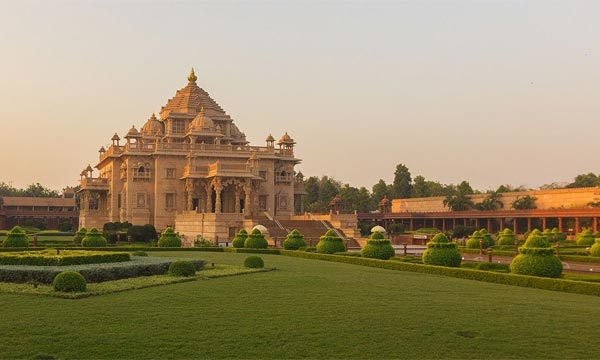
The
Jama Mazjid of the walled city is an excellent example of Indo-Persian
art, whereas the Birla Temple and the Chattarpur Temple complex are
considered as a blend of the North and South Indian architectural
styles. Gurdwara Raquab Ganj, Sheesh Ganj and Bangla Sahib stand tall
for Sikhism, whereas St. Thomas and St. Columbus toll their bells for
Christians. The Bahai Lotus temple has introduced the Bahai way of
worship in Delhi. Not to forget the ancient religions of Jainism and
Buddhism whose genesis is in India. The monastery near the Interstate
bus terminus is hub of Tibetan culture in India. Not only for the
Monastery but the place has acquired fame as shopping mall. Though
'Parsies' reside mainly in western India, Delhi opens its arms for one
and all.
Even
though
Hindus form the majority, almost 85%, India does not impose any official
religion on its people. Through the ages Delhi has accepted, adapted and
moulded itself to everything from Islam, rather from Aryan culture to
Christianity. It adopted herself with the changing faces of history. It
got the destroyed many times but it has retained the culture, heritage,
religion and the tradition of its time for the generations to come.
While visiting these architecturally
magnificent spiritual abodes, acquire prior information of the
etiquettes to be followed. Taking off shoes and other leather articles
and even covering the head and body in the sanatorium might be mandatory
at such places. Avoid hugging and holding hands at these places.
|