|
Monuments/
Fort & Palace/ Historical Palace in Kerala
Bolghotty
Palace
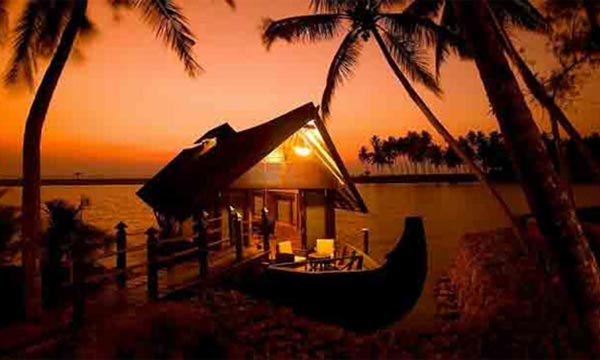
A Scenic island near the city of Ernakulam, Bolghatty is famous
for the Bolghatty Palace built by the Dutch in 1744 AD. This
palace, once the residence of the British resident of Kochi, is
now a KTDC (Kerala Tourism Development Corporation) hotel.
Bolghatty Palace is on an island, off Cochin in the Arabian Sea.
The building was once a Governor's palace for the Dutch and later
the home of the British Governors.
The palace is two-storeyed and contains well-decorated bed
chambers, a huge lounge wherein historical portraits are
displayed. The ferry ride from the mainland Ernakulam to the
island is a pleasurable experience. There is a golf course to
boot.
Dutch Palace (Mattancherry Palace)
Also known as Dutch Palace. Built by Portuguese and handed over to
Cochin Raja in 1555 AD and the was renamed as Mattancheri Palace
in 1663, when the Dutch spruced up the palace. However, neither
did Portuguese nor Dutch stay in the palace.
The centre of the building has a Coronation Hall where Cochin
Rajas investitures were held. Today, it is a portrait gallery of
the Rajas. Rooms adjacent display 17th century murals depicting
scenes from the epic, the Ramayana.
Bastion Bunglow
Built in the Indo-European style way back in 1667 AD, Bastion
Bungalow get its name from its location on the site of the
Stromberg Bastion of the old, Dutch fort. The building blends
beautifully into the circular structure of the bastion, has a
tiled roof and typical first floor verandah in wood, along its
front portion.
Jewish Synagogue
Built in A D 1568. Great scrolls of the Old Testament (Bible) and
copper plates in which the grants of privilege to Jews from Cochin
rulers were carved are preserved here.
Chinese hand-painted tiles are another attraction. Finely-wrought
gold and silver crowns gifted to the synagogue by various patrons
are also displayed. This, the only Synagogue in India has a
nostalgic past of a Jewish Diaspora.
A few Jew families are still residing in Kochi and its suburbs
reciprocating the love and affection of this land. Besides,
preserving the Synagogue is also their mission. Years back,
hundreds of families were here, but for them the call of roots
were irresistible.
Visitors permitted from 10 am to 12 am and from 3 pm to 5 pm.
Closed on Saturdays and Jewish holidays.
St. Francis Church, Kochi
The first European Church in India. Churches elsewhere in the
country were modeled after this Portuguese construction. A mute
witness to the watershed events in this coastal town, for past
five centuries.
Vasco De Gama, the legendary navigator from Lisbon, died at Kochi
during his second voyage to Kerala. he was laid to rest in the St.
Francis Church on Christmas eve 1524. Years later, his mortal
remains were taken back to Portugal. The sepulcher is still
preserved in the church hall and is open for visitors.
Vasco House
Believed to have been the residence of Vasco da Gama, this is one
of the oldest Portuguese residences in Fort Kochi. Built in the
early sixteenth century, Vasco House sports the typical European
glass paned windows and balcony cum verandahs characteristic of
the times.
Palakkad Fort
The old granite fort situated in the very heart of Palakkad town
is one of the best preserved in Kerala. It was built by Hyder Ali
of Mysore in 1766. The fort was taken over and modified by the
British in 1790. It is now preserved by the Archaeological Survey
of India.
|